Writers’ Homes and Creative Legacies
Posted
3rd April 2026
in blog, Blogs & News, People
Visiting a writer or an artist’s home has always had a unique appeal; unlike the alienation of some museum experiences – where the artefacts are displayed at a distance from the viewer, behind a glass case – the intimacy of a home environment is completely immersive and transportive. Virginia Woolf states that ‘writers stamp themselves upon their possessions more indelibly than other people, making the table, the chair, the curtain, the carpet into their own image’. The rooms that they once occupied are marked by their presence, becoming extensions of the writers themselves. Therefore, new visitors to these spaces can feel a tangible connection to historical writers through the rooms and objects that they interact with.
In Rooms of Their Own, an illustrated book describing the rooms where 50 different writers sat to write, the author Alex Johnson notes that ‘there is something fascinating to be experienced in the room where it happened, the views a favoured writer looked out on, the chairs they rested in, the atmosphere they created that in turn helped them create’. The visitor experience at the Emily Dickinson Museum immerses you in this environment; the museum offers ‘two-hour slots in which you can be alone in [her bed]room to write’. A visitor can retrace the exact steps Emily Dickinson made in her various pilgrimages around the room, as the floor is worn in the areas she ‘put her feet when she got out of bed in the mornings’ and in ‘a trail from her writing stand to her bedside bureau’.
Beatrix Potter wanted to ensure this same interaction with her house, Hill Top, after her death. She noted in her will that the house should seem as if she could return at any moment: ‘as if I had just gone out and [the visitors] had just missed me’. In this way, Hill Top’s present-day visitors become Beatrix Potter’s contemporaries; Beatrix Potter lives on past her death through the preservation of her house. Visitors do not simply observe history, but become a part of it.
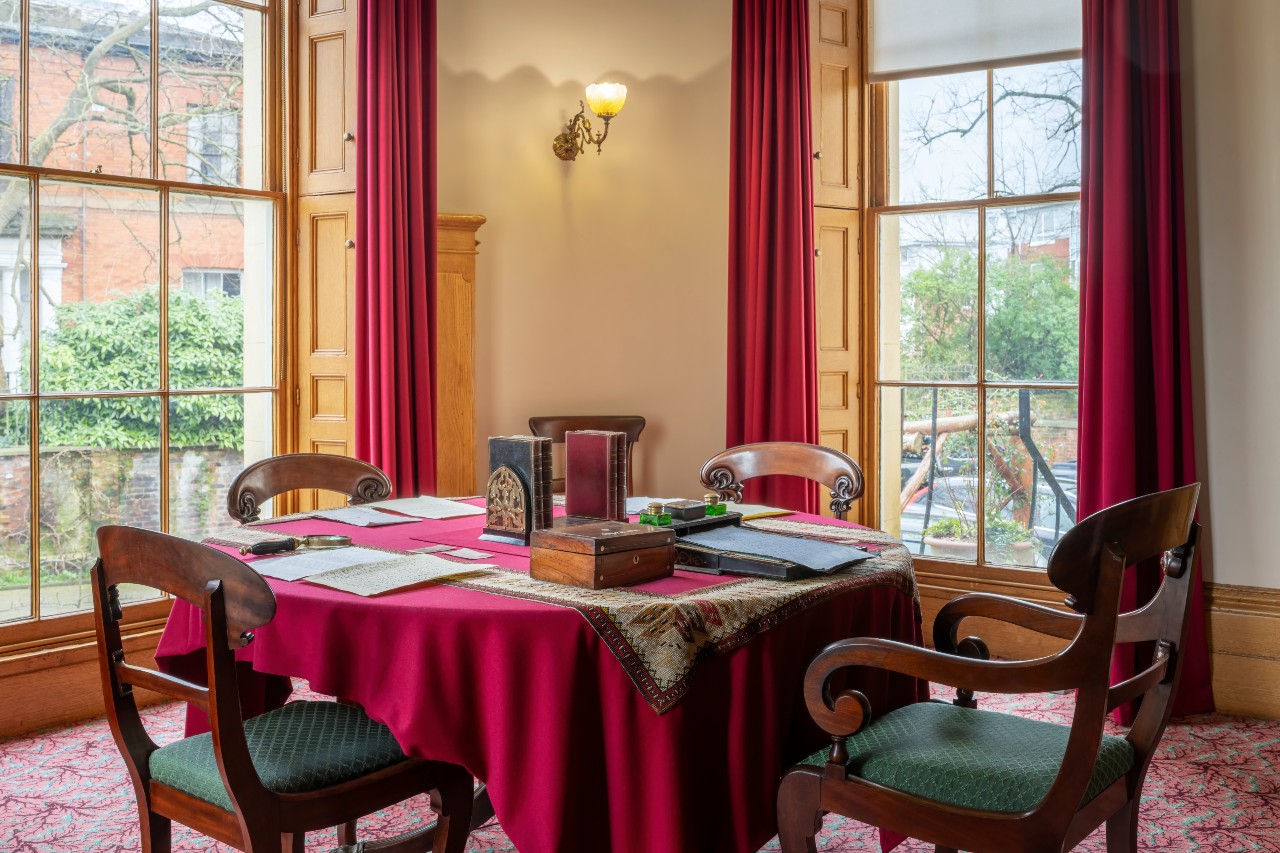
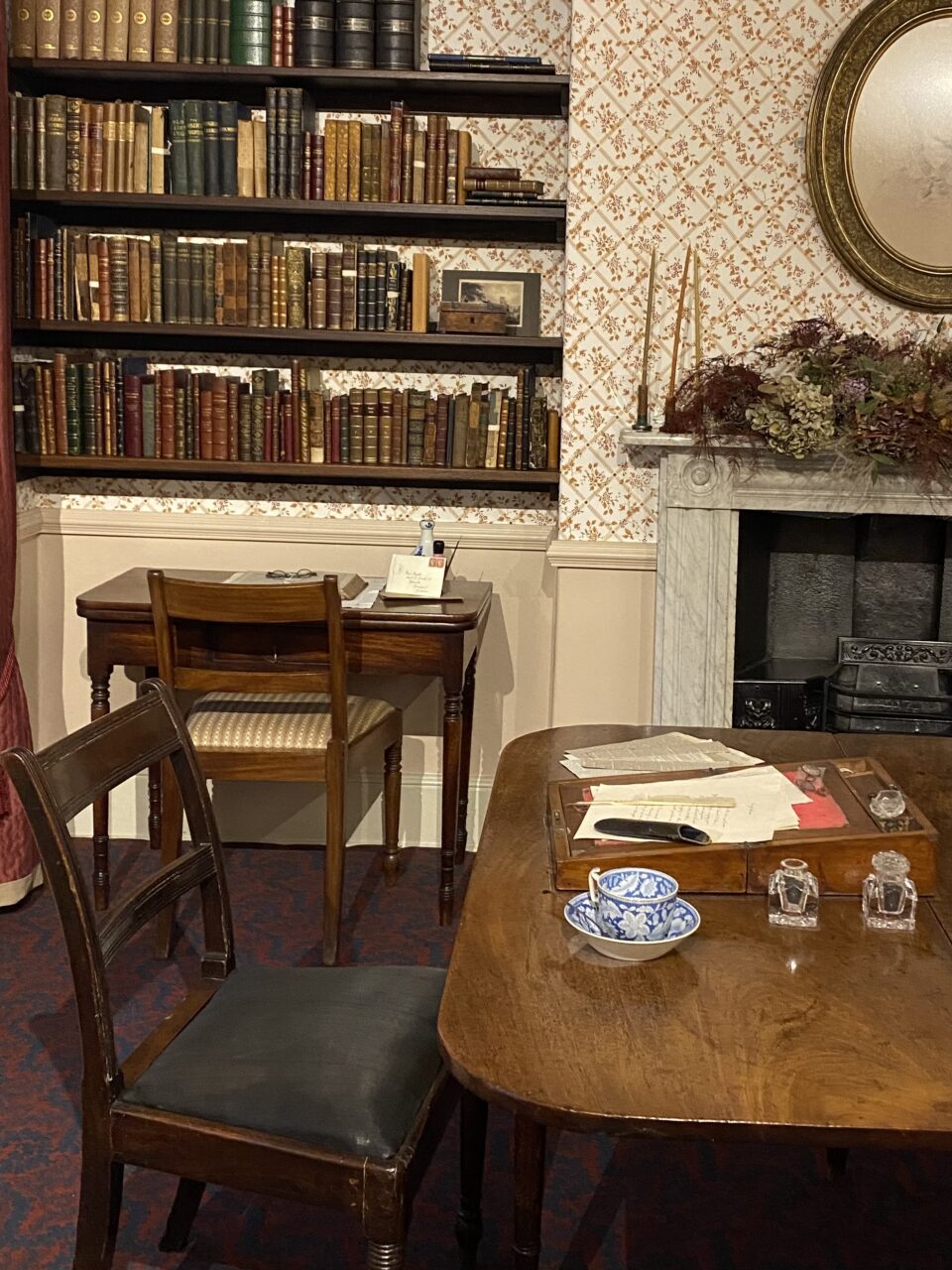
Similarly, at Elizabeth Gaskell’s House, visitors are encouraged to sit in the chairs and pick up the objects. A description of the House on the Historic Houses Association website instructs visitors to ‘take the opportunity to browse the books in William Gaskell’s study and sit where Elizabeth sat to write, overlooking her beloved garden’.
Because of this immersion in Elizabeth’s home, visitors are more intimately connected to the creative work that took place inside these same walls. This creative atmosphere can incite a similar creativity in its visitors; various writing and poetry groups have used the House as a venue and a site of inspiration. Mary Gavin’s prose poem The Space Between, written in a poetry workshop and posted on the Gaskell House’s blog in 2015, is copied below:
I feel such warmth, such connection with the present and the past, whilst writing in this house that once belonged to the Gaskells and was open to all, as it is today in the now. I feel my pen move across blank paper and create words and leave spaces, like a meditation of sorts for me. Finally, I read what has been written and sometimes share, or in the space listen to my new friends.
The space between the prompt, which Philip shares, and the sensitive sharing (or choosing not to) at the end, has become a peaceful and precious space, equivalent to past times immersed in nature; equivalent to dreaming.
It has been a golden, light–filled time, as the light is that streams through the golden stained glass in the entrance hall and onto the glistening stone floor below: a ray of golden light, connecting past with present … in the space between.
Gavin suggests that sunlight and warmth can transport visitors through time. In the patterns of light that spill into the rooms, the House’s present-day visitors can picture how Elizabeth herself might have felt. She must have experienced the same warmth on her face as she looked out from the Dining Room into the garden, sitting in the same spot that we can sit in now.
Literary houses often encourage this inheritance of the historical writers’ creative legacy through artists’ commissions or writers’ residencies, too. The artist Clare Twomey created an interactive piece (from 2017 to 2018) for the Brontë Parsonage Museum. The museum’s information plaque on the creation Wuthering Heights – A Manuscript stated:
Clare Twomey invited visitors to the Brontë Parsonage Museum to recreate the long lost manuscript of Emily Brontë’s masterpiece, Wuthering Heights. In the making of this handmade book, almost 10,000 visitors were invited to copy it down one line at a time, writing in the house where Emily wrote her famous novel. […] This re-creation honours Emily’s achievement and celebrates her contribution to English literature through the act of writing.
The manuscript is a piece of shared history: authored by Emily and by each of the writers who contributed to recreating it.
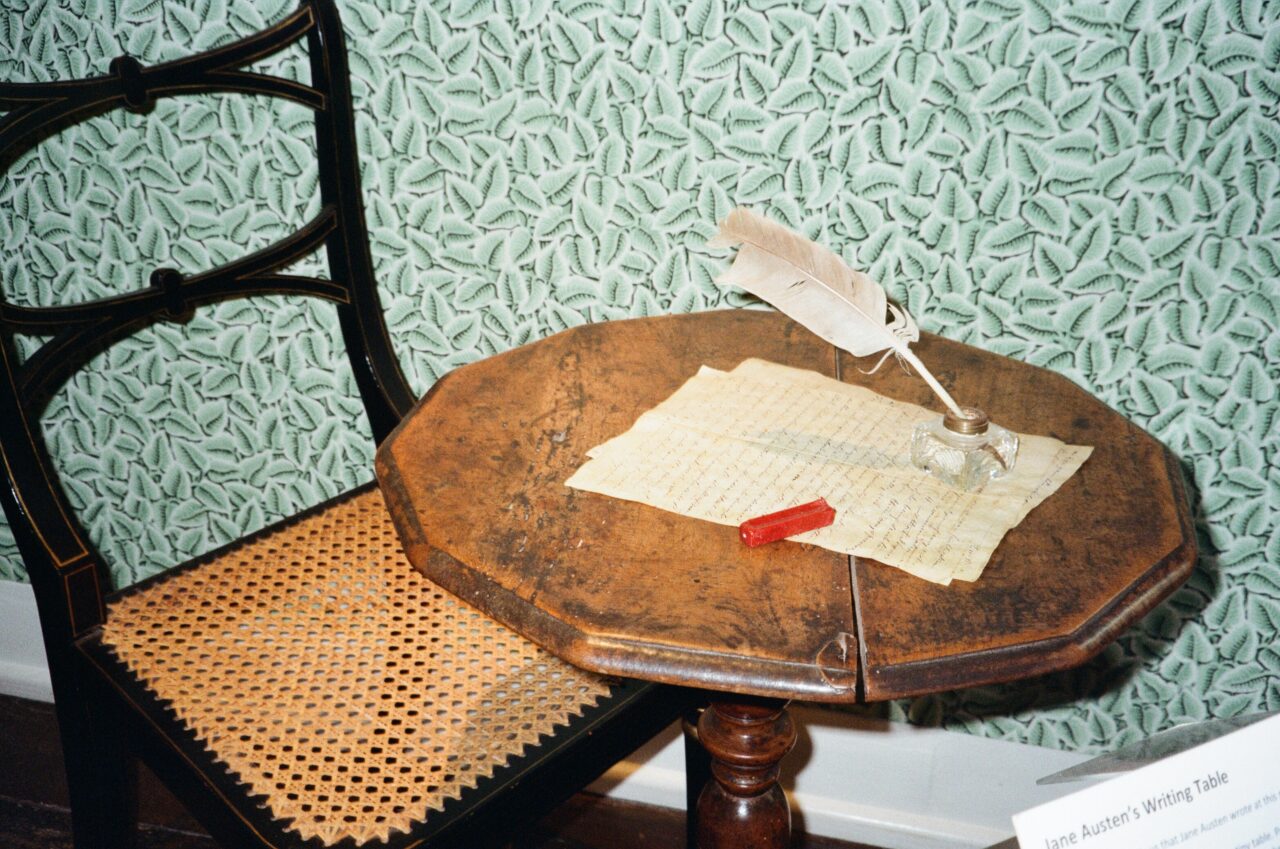
And further south, Jane Austen’s House in Chawton often displays work by artists and writers, and has hosted residencies in the past.
.
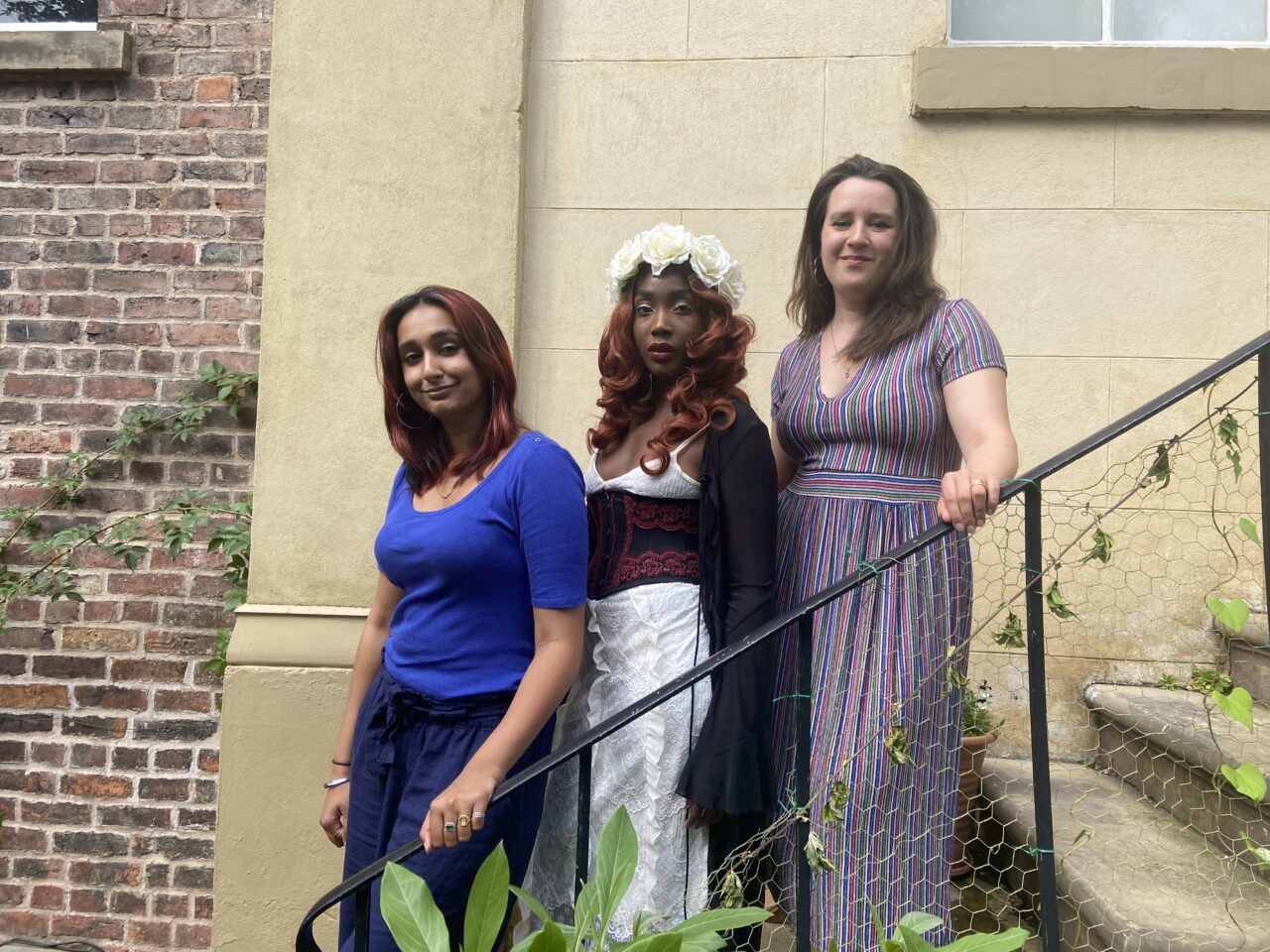
Elizabeth Gaskell’s House organised their first writers’ residency last year. The collection of work, titled I’ve Never Read Elizabeth Gaskell, is made up of poems by Princess Arinola Adegbite, short stories by Guruleen Kahlo, and a monologue by Georgia Affonso. Elizabeth Gaskell left her mark on this house, and now these writers have left theirs. The past and present are interconnected; a writer’s memory can now co-habit with the visitors of today and tomorrow.
References
- Virginia Woolf (1931), Great Men’s Houses.
- Alex Johnson (2022), Rooms of Their Own: Where Great Writers Write. Illustrations by James Oses.
- Mary Gavin (2015), The Space Between. Click here to read the original blog post.
- Clare Twomey, ‘Wuthering Heights – A Manuscript’. Click here for further information on this project.
- Princess Arinola Adegbite, Georgia Affonso, and Guruleen Kahlo, I’ve Never Read Elizabeth Gaskell. This is available to buy via our online shop, or in-person at the House when you next visit.
Blog by Rosie Davis, Volunteer at Elizabeth Gaskell’s House